

About Prince Adewole Adebayo
SDP 2027 Presidential Candidate. Political Activist, Distinguished Lawyer, Entrepreneur, Philanthropist.
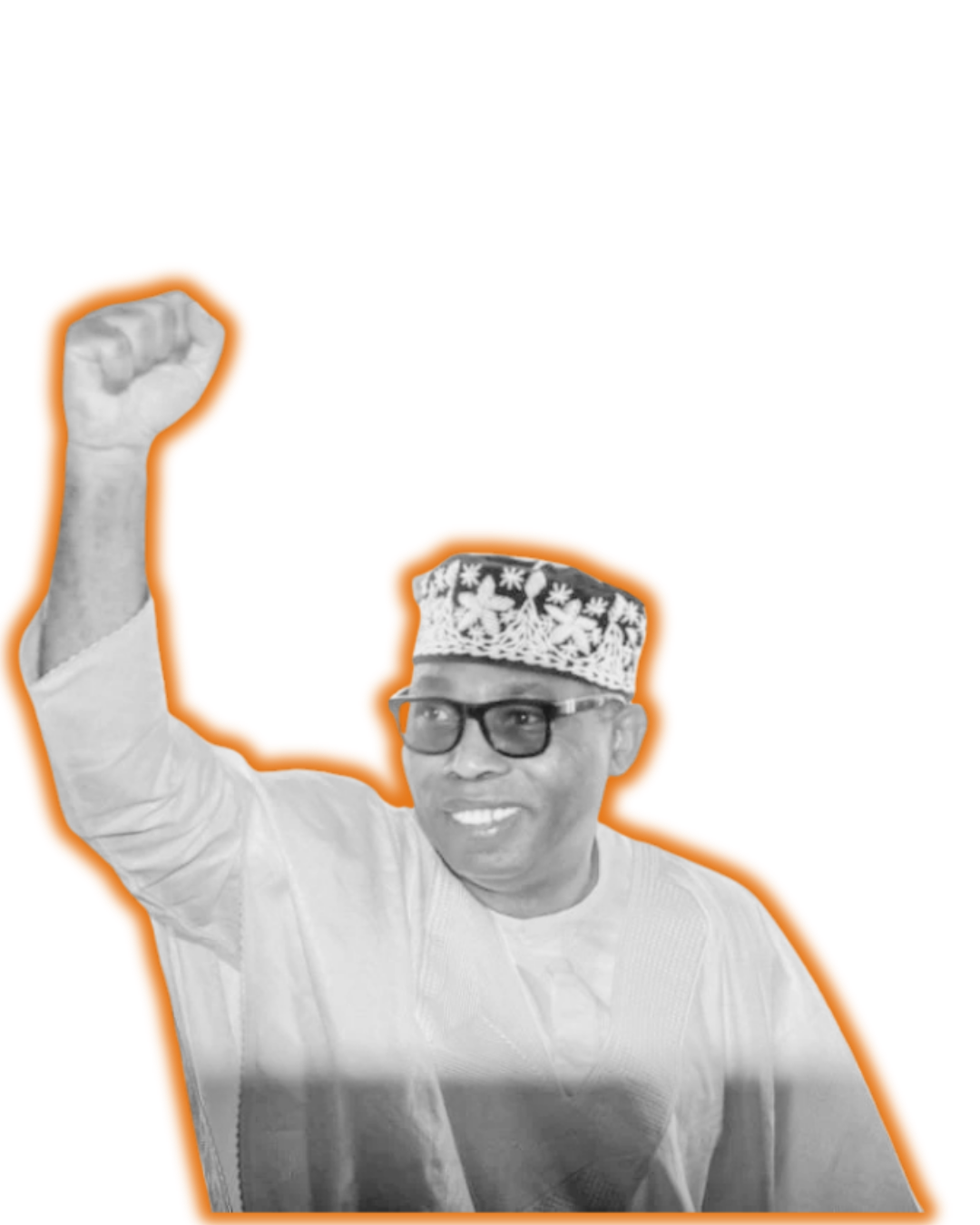

Professionally, Prince Adewole Adebayo is a political activist and distinguished legal practitioner licensed to practise in Nigeria, United States of America (USA) including New York and California. His expertise lies in international investment law where he has handled high-profile cases across Australia, England, Nigeria, USA and Europe.
His practice cuts across the continents of Africa, America, Asia and Europe. He is a Fellow of the Chartered Institute of Arbitrators. In 2006 Prince Adewole Adebayo was appointed by the United Nations Organisation (UNO) and the Economic Community of West African States (ECOWAS) as Commissioner on the Truth and Reconciliation Commission in Liberia. He is Chairman of Africa Dialogue Mission (ADM).
Prince Adewole Adebayo was born on 8 January 1972 and hails from the Ondo Kingdom where his royal family has held authority for over Five Hundred (500) years, tracing its lineage back to around 1510 AD. The family branched from the ancient Oyo monarchy. Prince Adebayo is a direct descendant of Osemawe Odunola, grandson of Osemawe Lamele and direct descendant of Alaafin Onigbogi and Alaafin Sango of Oyo Ile and Elempe, Etsu of Nupe and Oba of Bini.
Early Political Activism
At the youthful age of 19 years Adewole Adebayo joined the Social Democratic Party (SDP) in 1991 after comparing its manifesto which emphasised social investment in education, healthcare, housing and infrastructure – with the more market-driven National Republican Convention (NRC) He saw the SDP’s ideology as essential to first building Nigeria’s human capital which would then provide the foundation for unlocking free-market efficiencies.
Entrepreneurship
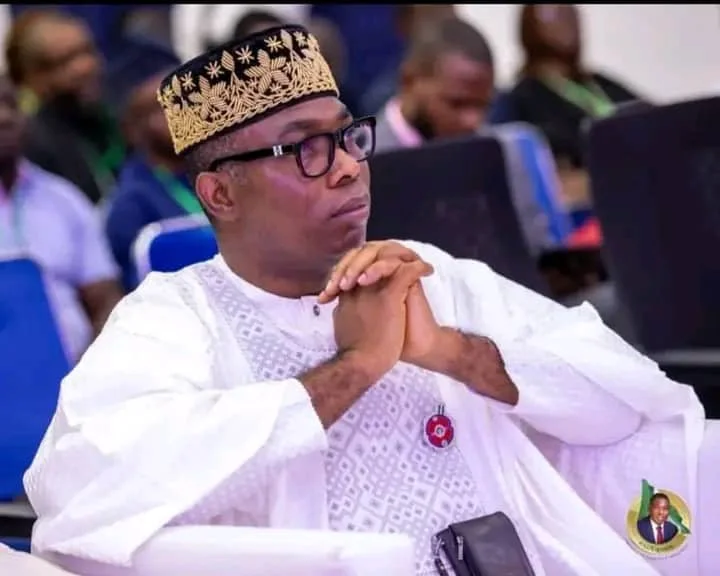
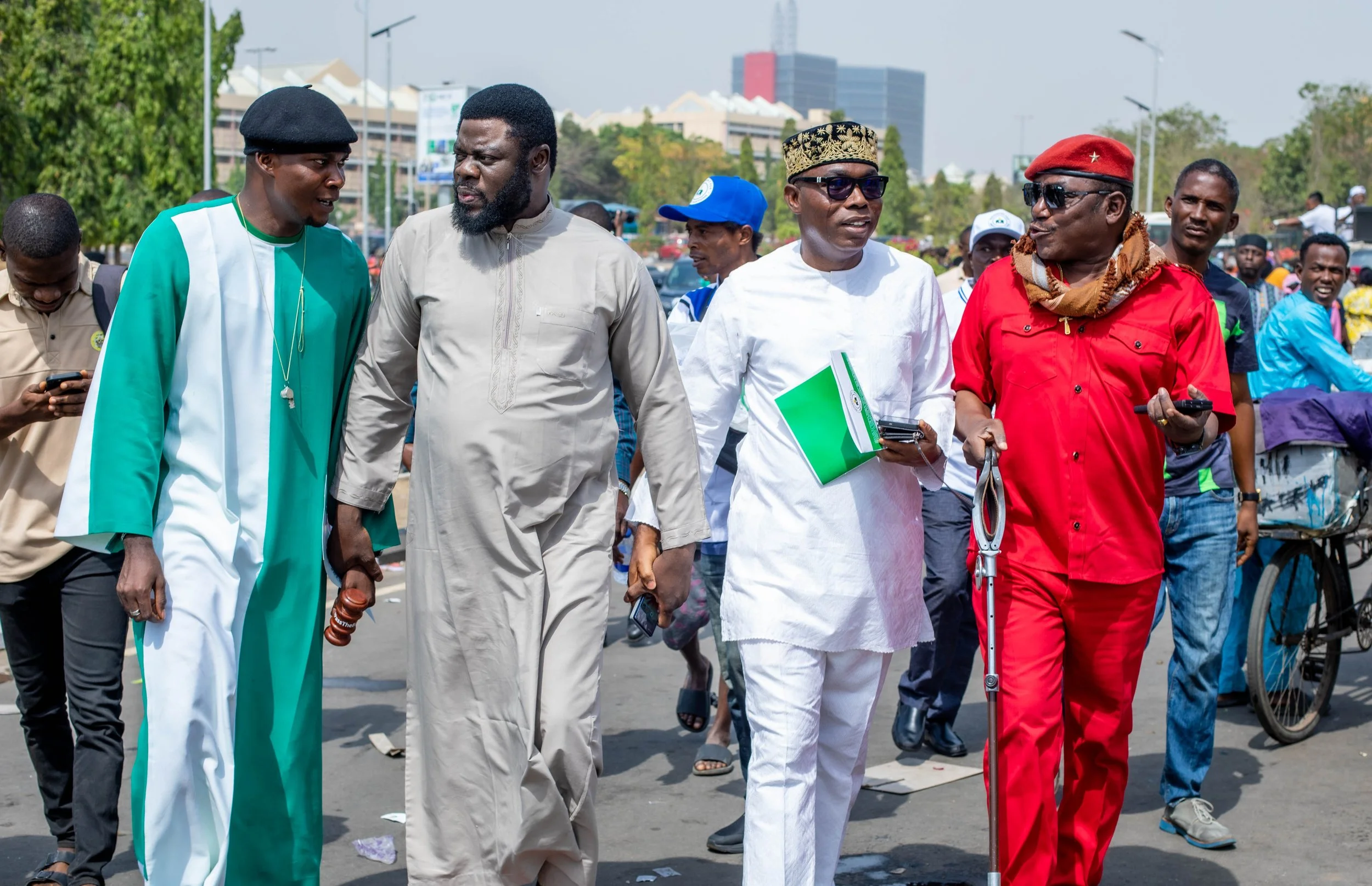
Prince Adebayo is a successful entrepreneur with businesses in agriculture, pharmaceuticals, and media. In agriculture he champions sustainable practices, while his environmental passion is evident in his personal hobby: tree planting. This hands-on approach reflects his strong belief in personal agency to combat environmental degradation. He is Chairman of SAI Phytochemical producers of drugs for the treatment of sickle cell anaemia in India and Nigeria; the Prince is a farmer and Chairman of Agbede Agric projects, CEO of Blueprint Global Group Washington DC, Board Adviser of US Black Chambers of Commerce. Board of Adviser, National Black Chambers of commerce USA. He is also President and Board Chairman of several corporations in the US, Nigeria and East Africa.
In 2016 his abiding love and compassion for his country, the Federal Republic of Nigeria, inspired him to relocate some of his businesses to Nigeria to contribute in the development and growth of his country. He has to his credit many notable companies he has founded, including KAFTAN TV headquartered in Ondo with additional branches in Lagos, Abuja and Washington DC. KAFTAN TV broadcasts across more than Twenty (20) countries reaching an audience of over Six (6) million homes with news in business, politics, sports, entertainment, and global trends. As part of his innate desire for fair representation, he factored in the local audience by launching KAFTAN TV Hausa, KAFTAN TV Yoruba; and plans to launch KAFTAN TV Igbo.
Through his media establishments Prince Adewole Adebayo has trained and produced One Thousand and Twenty-Two (1,022) National Youth Service Corps (NYSC) members in its three stations; Ondo, Lagos and Abuja, after which he retained One Hundred and Three (103) corps members. In November 18, 2021, NYSC recognised KAFTAN TV as the best corps members employer in Ondo state. In partnership with Ondo Ekimogun Youth, he has offered broadcast training to Fifty-Nine (59) youths who have successfully graduated and 5 have been offered full-time employment by KAFTAN TV. His workforce has been described as reflecting Nigeria’s diversity.
Philanthropy
Prince Adewole Adebayo is also known for his philanthropy, particularly his support for expanding access to education. He has consistently sponsored students in Nigerian and foreign tertiary institutions. Currently, about Two Thousand (2,000) students are beneficiaries. He has also empowered hundreds of women financially through various sustainable economic and income-generating activities across a range of sectors.
Meritocratic, Visionary Leadership to Harness Nigeria’s Riches for Its People.
.Prince Adewole Adebayo embodies the change he seeks: meritocratic, visionary leadership to harness Nigeria’s riches for its people. By prioritising youth empowerment through education, skills and opportunities, and by turning challenges into investment magnets, he aims to contribute to forging a prosperous, globally competitive nation.
Prince Adebayo’s political foray stems from profound dissatisfaction with Nigeria’s leadership deficits. He argues that Africa’s environment, rich in resources and human potential, renders poverty illogical, akin to starving at a buffet. According to Prince Adebayo “The environment makes you a liar when you say you are poor,” attributing widespread deprivation to poor leadership rather than scarcity. Genetically predisposed to happiness and health, Nigerians, he believes, are thwarted by systemic failures that could be rectified in one generation through skill acquisition, education and agricultural extension.
According to him “People are growing tired of hearing about Nigeria’s vast economic potential. We have clear systemic issues which few in positions of authority are willing to fix. Nigerians deserve an alternative, effective solution.”
Investing for a Humane Society
Prince Adebayo’s vision for Nigeria is rooted in social democracy: a government actively investing in its people to create a humane society. He envisages a nation where democratisation extends beyond politics to economics, fostering an independent judiciary, rules-based markets and infrastructure development. Critiquing past regimes for jobless growth and rent-seeking, he advocates meritocratic leadership that prioritises international best practices over patronage.
Prince Adebayo emergence as Presidential candidate of the Social Democratic Party (SDP) the second time builds on the 2023 bid when at 50 and was described as a “young man” by the media. He aims to lead a generational shift, drawing from his private-sector experience to instill clean governance and economic dynamism.
His ambitions centre on reversing Nigeria’s fortunes by addressing core maladies: poverty, insecurity, unemployment and infrastructural deficits. He plans to achieve this through a multi-pronged strategy.
Firstly, he would enforce Chapter 2 of Nigeria’s Constitution which mandates social investments in security, education, healthcare and housing. By prioritising these over extravagances such as presidential jets, he aims to eliminate poverty.
Secondly, he would foster full employment, rejecting any economic model that does not engage the populace. His priority is single-digit unemployment through targeted programmes, emphasising that “once you have full employment, the rest of your problems can be dealt with.”
Key to his turnaround plan is building a “medium-sized economy” blending China’s industrialisation, India’s urban vibrancy and the US’s market sophistication.
“Nigeria would export contributions, not problems — talent, goods and capital — while embracing global integration,” Adebayo explains.
He rejects isolationism and protectionism, advocating competitive rules under which intellectual property is purchased, not stolen, and foreign labour flows freely.
Strategy
Prince Adebayo outlines five pillars: establishing a clean, accountable government by appointing ethical ministers and advisers; boosting productivity to eradicate poverty; instituting transparent market rules to attract investors; ensuring an independent judiciary for social, economic and legal justice; and achieving full employment as a non-negotiable goal. Mid-term success in his first term, he asserts, would signal a prosperous presidency.
Crucially, Prince Adebayo pitches Nigeria as an indispensable investment hub. “Africa is the place to go. It’s not if, but when,” he asserts, urging investors to look to the continent for opportunity. As Nigeria progresses towards the rule of law, economic spaces will open, with separated powers ensuring enforceable business rules and less politicised justice.
Bridging Infrastructure Gaps
An estimated One Trillion US dollars (US$1tn) is required to bridge Nigeria’s infrastructure gap, which he believes should be viewed as an opportunity rather than a deterrent. Foreign investors, particularly from China, have capitalised on this by building roads and improving electricity access which have in turn reduced business costs and facilitated trade. Digital infrastructure, including broadband and satellite technology, expands this definition in the era of the digital economy.
Prince Adebayo insists on best practices, rejecting contact-based entry in favour of rule-based markets. Nigeria’s youthful manpower, new markets and industrial inputs make it the “new frontier”. Ethical investments from OECD nations could boost global productivity, lower prices and integrate Africa beyond aid and charity.
He believes that in partnership, investors gain predictability, security and ease of repatriation while contributing taxes. Prince Adebayo envisages mutual flows: Nigerian capital moving outward, foreign expertise moving inward, and Nigeria creating an integrated economy that leads Africa in embracing global rules without historical grievances.
Youth Empowerment
Central to Prince Adebayo’s agenda is youth empowerment and education. He recognises Nigeria’s youth bulge as both a challenge and an asset, while lamenting the disenfranchisement of young Nigerians. He attributes this mostly to cultural norms in which even 40-year-olds are seen as “kids”, as well as the lingering influence of military rule and delays in democratic development. Young people, he says, must “own the country” rather than export their skills or merely complain.
His youth empowerment plan covers multiple sectors. In education, he aims to enrol 20 million out-of-school children through family support, foster care, dormitories, nutrition and sports programmes.
Jobs
On jobs, he proposes monitoring employment closely to prevent jobless growth and has a plan to create 30 million jobs across sectors including agriculture, digital innovation and local manufacturing.
Agriculture
In agriculture, Adebayo seeks to modernise the sector with value-added processing, such as ginger oil production, to generate employment.
Sports
Through sports, he intends to engage young people at the community level. In green technology, he plans to train five million youths in horticulture, reforestation and environmental stewardship.
In the creative industries and science, technology, engineering and mathematics (STEM) fields, he will identify top talent and channel them into long-term careers in the military, civil service and academia.
Enterprise
Finally, in enterprise, Adebayo plans to establish incubation centres, nurture entrepreneurs and help create the next generation of Nigerian entrepreneurs and business leaders.
Education
Education underpins Nigeria’s potential for success, starting from prenatal care, vaccinations, nutrition and elementary schooling to build key skills and intellect. Adebayo criticises delayed opportunities, noting that investing in the basics yields better results than elite universities without foundational human capital. Drawing from his own publicly funded education, from elementary to postgraduate level, he vows to replicate this for millions, fostering loyalty among young people who feel that “the country has made me.” A safe society free from trauma, he argues, will unleash youthful creativity, positioning Nigeria as a major source of innovation.
Women
Women who make up roughly half the population, are integral to his vision, with Prince Adebayo leading a programme to create one million women entrepreneurs across Africa. His messages resonate with Nigerians across the board particularly, his assertion that “Nigeria’s fortunes can turn in one generation,” inviting investors to join the transformation.